2. The ice age is a time of irregular climate, that was worse in B.C. Researchers can measure ancient temperatures by oxygen isotopes in icebergs that have been around for thousands of years. Large glaciers in Greenland and Antarctica were a big help in discovering temperatures dating back hundreds of years. Periods of time that have irregular temperatures but aren’t considered actual ice ages are called little ice ages, which are basically periods of cooling after warm eras. Several ice ages have occured throughout history.
picture link - http://www.crrel.usace.army.mil/permafrosttunnel/Ice_Age_Cycles.jpg
4. Two causes of the little ice ages are decreased solar activity and increased volcanic activities around the world. Many researchers have different opinions on the typical weather patterns so ice ages are hard to identify. Ice ages are basically unusual periods of global and regional changes. There’s debates in contributors to ice ages like solar, volcanic, and oceanic occurrences. The last recorded ice age was nearly 12000 years ago. Thousands of years ago weather wasn’t as predictable.
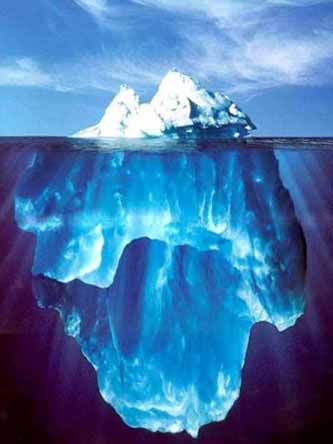
picture link - http://www.crystalinks.com/icebergblue.jpg
2. When ice bergs melt, they leave behind sediments that may be frozen thousands of years before. There’s recurring cooling events every 1500 years or so. Oceans that contain ice bergs that are melting indicate temperatures with a series of 1-2 degrees Celsius. The same sediments were found near Africa, indicating times of irregular temperatures. The sediments from Africa were ranging from 3-8 degrees Celsius.
picture link - http://web.ncf.ca/jim/ref/twoMileTimeMachine/iceAges.png
1. The depth of the Antarctic glaciers makes them more useful when it comes to researching because it shows more. Times of high volcanic activity can be shown too because of sediments from ash can cloud solar radiation for up to 2 years. Cooling temperatures and low sun activity over time correlates with volcanic activities.
picture link - http://lh5.ggpht.com/_dIgAPkniWsM/R6X_le1iHrI/AAAAAAAAFbw/RjNNM_ICCDw/IMG_0609+edited.jpg
3. Depending on the researcher, little ice ages were recorded an average of three times between the 16th and 19th century. Little ice ages were introduced to scientific literature by Francois E. Matthes in 1939. Climatologists and historians can’t agree on exact dates of the events. Most researchers opinions are dependent on the local conditions.
picture link - http://aycu23.webshots.com/image/37902/2000927070208373189_rs.jpg
Ice ages are correlations of different regional and worldwide activities. Research is to show dates of the ice ages, where they occurred worldwide, temperatures, and why they happened. Ice ages leave behind sediments that are used to research that. The average of little ice ages are typically every 1500 years.
picture link - http://www.isgs.uiuc.edu/maps-data-pub/publications/geonotes/graphics/gn3--Glacier-Small.gif
http://www.answersingenesis.org/Home/Area/AnswersBook/images/16IceAge.jpg
http://earth.usc.edu/~stott/public_html/PNG%20figures/high-low%20latitude%20coupling.gif
http://www.johnstonsarchive.net/other/earthiceage.jpg
http://geoinfo.amu.edu.pl/wpk/pe/a/harbbook/c_viii/images/alpine/Bee0054.GIF
bibliography.
1. URL - www.dmns.org/main/en/minisities/iceage/ia_indepth/index.html
title - ICE AGE.
author - n/a.
organization - Denver Museum of Nature and Science.
copyright/date created - 2005.
2. URL - www.muller.lbj.gov/pages/iceagebook/history_of_climate.html.
title - History of Climate.
author - William Buckland.
organization - n/a.
copyright/date created - n/a.
3. URL - www.en.wikipedia.org/wiki/little_ice_age#causes.com
title - Little Ice Age.
author - wikipedia.
organization - wikipedia.
copyright/date created - last update - january, 2009.
4. URL - www.geocraft.com/wvfossils/ice_ages.html
title - Global Warming - A Chilling Perspective.
author - Monte Hieb.
organization - Denver Museum of Nature and Science.
copyright/date created - October 5th, 2007.




No comments:
Post a Comment